About the Labrador Current
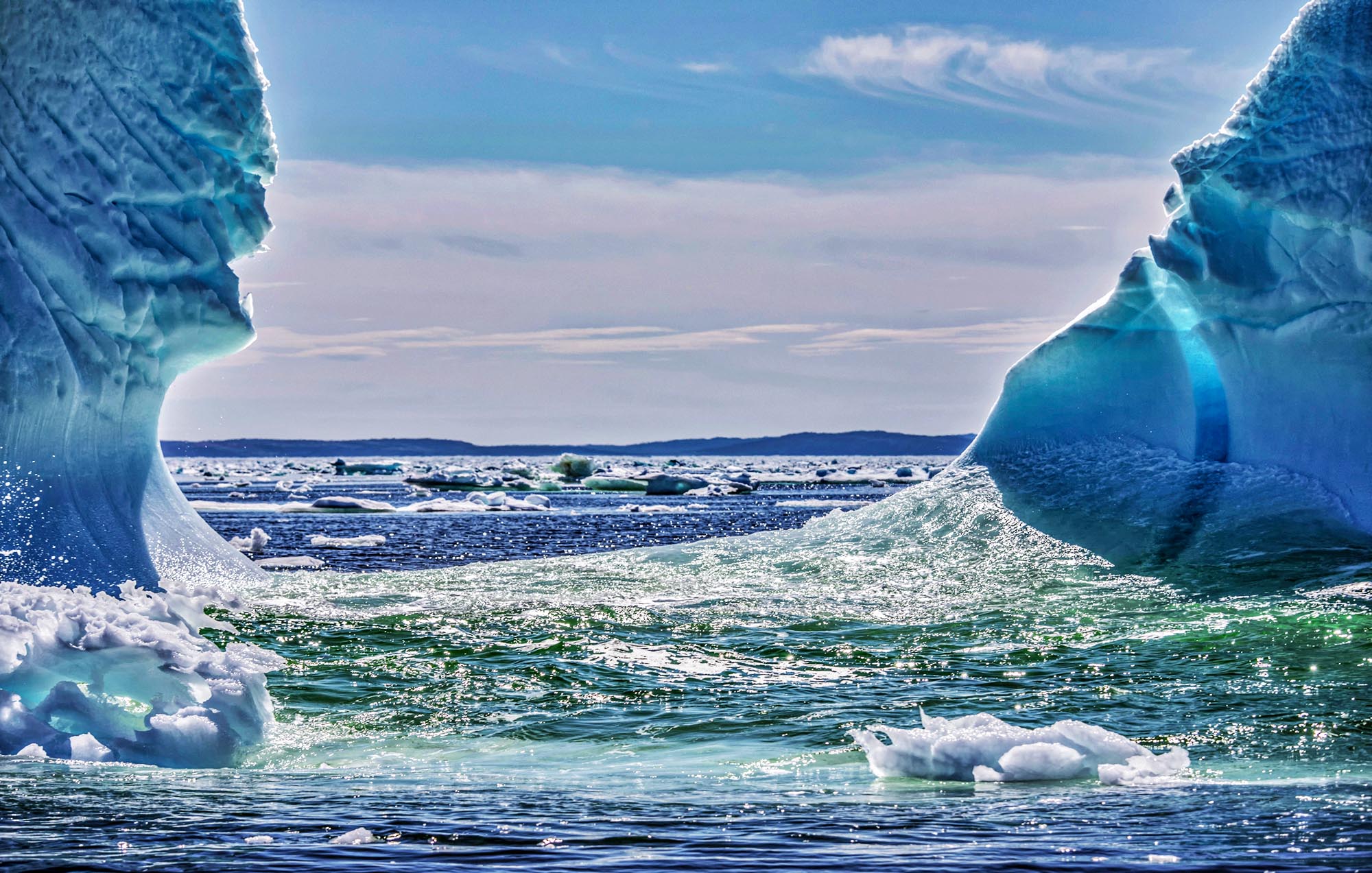
The Labrador Current is the primary southbound ocean current responsible for transporting Arctic water, sea ice, and icebergs into the North Atlantic.
It flows along the coasts of Greenland and Labrador before reaching Newfoundland, where iceberg visibility and coastal interaction occur.
What It Does
The Labrador Current acts as a natural transport system, carrying icebergs calved from Greenland glaciers southward along the continental shelf. This movement determines when and where icebergs become visible to coastal regions such as Twillingate and St. Anthony.
- Transports icebergs from Arctic source regions
- Maintains cold-water flow along the Labrador shelf
- Controls seasonal iceberg arrival timing
- Influences coastal visibility and grounding patterns
Why It Matters
Iceberg presence is not random. It is governed by current strength, direction, and seasonal alignment. Understanding the Labrador Current allows observers to anticipate iceberg movement, rather than react to isolated sightings.
When the current is active and aligned with seasonal timing, iceberg transport increases. When weakened or disrupted, iceberg visibility declines regardless of upstream supply.
How It Connects to Iceberg Season
Iceberg season in Newfoundland is the visible result of Labrador Current activity. The current delivers icebergs into coastal zones where wind, coastline shape, and local conditions determine final positioning.
This site tracks and interprets the current as part of a broader system:
- Upstream: Greenland glacier calving zones
- Transport: Labrador Current flow dynamics
- Coastal Interaction: Newfoundland and Labrador shorelines
- Observation: Real-world iceberg sightings
System Role
LabradorCurrent.com functions as the flow layer within a distributed network of sites that track iceberg movement across the North Atlantic.
It supports:
- TwillingateIsland.com — live iceberg viewing and access from the Twillingate Facebook group.
- IcebergSeason.com — seasonal timing and forecasting
- IcebergAlley.org — regional context and archive
Interpretation Layer
This site does not simply display data. It interprets current conditions into readable signals:
- Flow State — strength and continuity of southbound transport
- Direction — dominant movement of water and ice
- Ice Status — presence and density of transported ice
- Coastal Impact — likelihood of visibility and grounding
These signals form the basis for real-time decision making across the network.